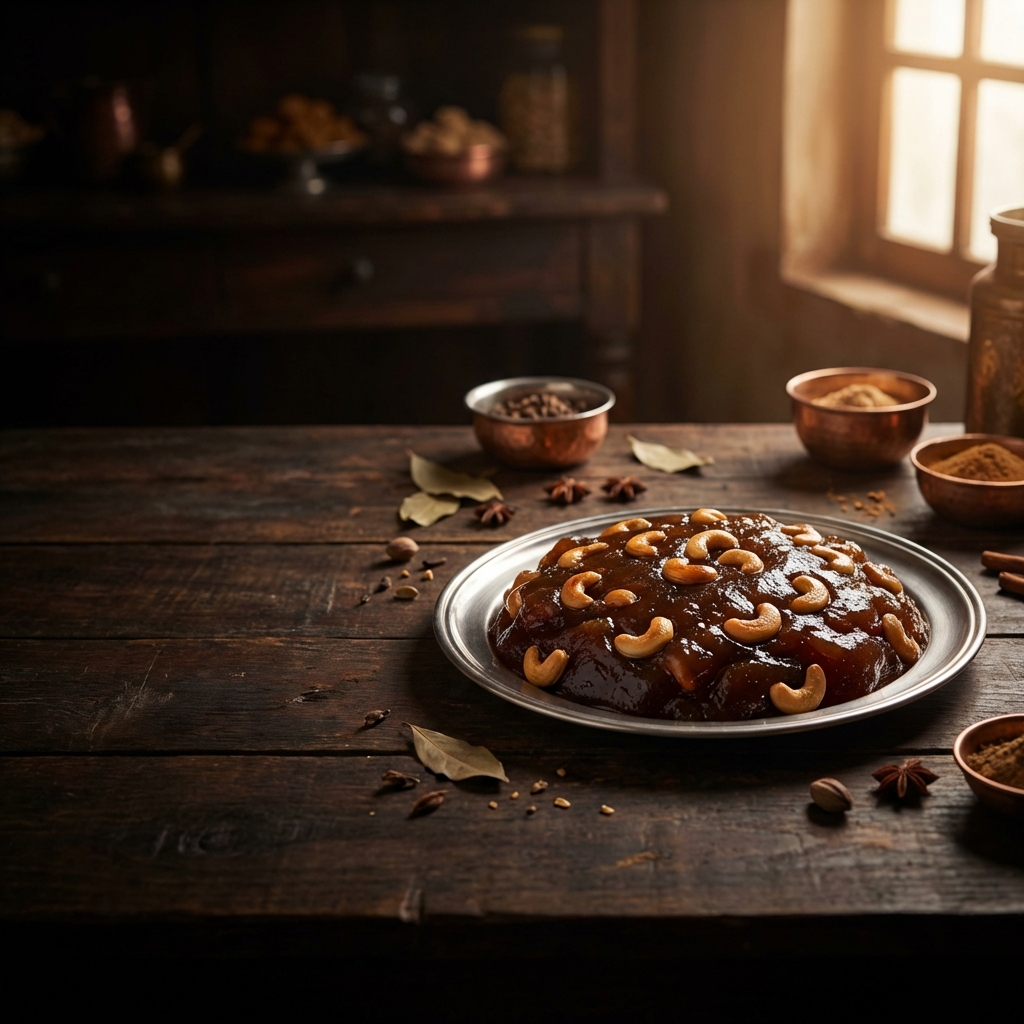
This Madugula Halwa created in 1890 by Dangeti Dharma Rao in Madugula village, Andhra Pradesh, this famous halwa was designed as a durable, slow-cooked treat to stay fresh for weeks. Originating from a humble house, the 135-year-old recipe (passed down through four generations) uses wheat milk, ghee, Araku forest honey, and dry fruits, cooked over wood fire.
Madugula Halwa hails from the serene Madugula village in the Visakhapatnam quarter of Andhra Pradesh. The halwa has been prepared in the region for over a century and is deeply simple, based on the artistic and culinary traditions of the area. Locals relate stories of how this halwa form was handed down through generations, gaining perfection with each fleeting time.
What makes this halwa extraordinary is the heritage tied to its preparation. The form has remained largely unchanged over decades, giving it a rustic charm and authenticity that ultramodern acclimations frequently warrant.
Unique Constituents and Flavor
At first regard, Madugula Halwa might seem like a simple delicacy, but its magic lies in its precisely chosen constituents and the way they're harmonized.
● Wheat Milk
The core component of this halwa is uprooted wheat milk, a painstakingly set liquid deduced by soaking and grinding whole wheat. This component gives the halwa its hand a smooth texture and rich flavor.
● Ghee
Pure desi ghee (clarified adulation) is used in cornucopia, advancing the halwa's lustrous finish and indulgent aroma. The ghee also enhances the overall uproariousness and ensures a luscious mouthfeel.
● Sugar
The agreeableness is impeccably balanced, avoiding the satisfying heaviness that some goodies might have.
● Dry Fruits and Nuts
Finely diced cashews, almonds, and occasionally raisins are freehandedly sprinkled into the halwa, adding a pleasurable crunch to each bite.
The interplay of these constituents creates a harmonious balance of agreeableness, uproariousness, and texture, making it a one-of-a-kind delicacy.
The Legendary Origin
Madugula Halwa
Experience the Authentic Taste
Crafted with the same original recipes inherited from the masters of Madugula Halwa.
Explore the Collection →